
 smngrs951
Google and other business stakeholders have a contractual relationship with Geomys to incorporate specific Working Environments in the certificate. Mixed with the reminiscence safety guarantees offered by the Go compiler andruntime, we imagine this delivers on our goal of constructing Go one of the easiest,most safe solutions for FIPS a hundred and forty compliance. To square this circle, in FIPS mode we preserve a compliant userspace NISTDRBG based on AES-256-CTR, after which inject into it 128 bits sourced from thekernel at each learn operation. This extra entropy is considered “uncredited”additional knowledge for FIPS purposes, however in apply makes it as sturdy asreading instantly from the kernel—even if slower. These packages contain no cgo, that means they cross-compile like any other Goprogram, they pay no FFI efficiency overhead, and they don’t undergo frommemory management security issues, unlike Go+BoringCrypto and its forks. Geomys led the implementation effort in collaboration with the Go SecurityTeam, and is pursuing a broadly applicable FIPS validation for the benefitof the Go group.
This creates a significant bottleneck in the transition course of, notably in light of the administration’s bold deadlines. For instance, agencies must submit their transition plans to the Workplace of Administration and Finances (OMB) by Oct. 22, 2026, to guarantee that all “high-value” federal belongings and systems to transition to PQC-hardened authentication by 2030. While the administration has set a tempo for migration that’s proportionate to the risk, the certification course of can not ship solutions at speed. Providers SHOULD configure agency tenants by default to use cryptographic providers that use CMVP-validated modules when such modules are available. Key administration, proper implementation, and validated cryptographic hardware all matter.
FIPS launched supportfor RFC 6979 deterministic ECDSA, however not for hedged ECDSA. However, for a large variety of operating methods precompiled variations of the OpenSSL toolkit can be found. In particular, on Linux and other Unix working methods, it is usually recommended to link against the precompiled shared libraries supplied by the distributor or vendor.
The CMVP bottleneck is a self-imposed barrier that the federal government is fully in a place to take away. CMVP presently lacks the assets to maintain up with the calls for positioned on it, and the government is not required to function the validator of final resort when it comes to module security. An alternative approach that leverages insured warranties provided by safety firms backed by insurance corporations can present comparable assurances of performance with out relying upon government businesses to provide a secondary approval. As a proof of concept, OMB and NIST ought to approve a pilot program that accepts insurer-backed assurances and module certification as an various alternative to CMVP validation. If the pilot is a hit, then this alternative strategy ought to become the everlasting answer to the validation backlog problem. The Etherstack FIPS Cryptographic Module is a single-board security system that implements APCO P25 encryption, decryption, key management and key storage companies in conformance with FIPS140-2 standards.
Welcome To The Openssl Project
Warranties are traditionally used to cover physical products; nevertheless, a rising number of corporations have begun providing cyber warranties on safety software or monitoring services. Limitations of high quality assurance by the use of warranty embrace the reality that the warranty is just as useful as the seller’s capacity to pay and that its phrases may not be sufficient to cowl the full loss to customers of defective cryptography. The current sunsetting of all FIPS certificates has compounded these problems by basically collapsing the market of compliant cryptographic merchandise out there to the government throughout the board—not simply within the PQC arena. Companies should now navigate the adoption of merchandise in their validation baselines while simultaneously navigating PQC migration, exacerbating a resource squeeze that was already taking place previous to migration mandates from the administration.
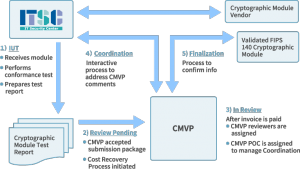
This may open a validation pathway and not utilizing a secondary federal queue, making extra PQC providers obtainable to federal agencies despite CMVP’s pause on new purposes. The Cryptographic Module Validation Program (CMVP) is a joint effort between the Nationwide Institute of Requirements and Know-how under the Division of Commerce and the Canadian Centre for Cyber Safety, a branch of the Communications Safety Institution. The aim of the CMVP is to promote the use of validated cryptographic modules and supply Federal companies with a security metric to use in procuring equipment containing validated cryptographic modules. CMVP has over 1,000 validated modules which are presently energetic, with over 5,000 modules validated because the starting of this system. In addition to having their own capital at risk, insurers are incentivized to verify the claims made by module suppliers. Whereas some cyber insurers may possess the internal experience wanted to adjudicate these claims, verification could possibly be contracted out to laboratories or different third-party evaluators in a position to test the effectiveness of different cryptographic modules.
Maintain Updated On Our Cybersecurity And Emerging Threats Work, Together With Our Technology Three In 30 E-newsletter
The stringent necessities at Stage four make it the selection for nationwide security applications where compromise isn’t an option. Non-validated cryptography is considered as providing no safety to the data or data—in effect the information could be thought-about unprotected plaintext. If the agency specifies that the data or information be cryptographically protected, then FIPS or FIPS is relevant.
- But this association works provided that CMVP’s last evaluation keeps tempo with what the labs ship.
- Consequently, the PQC migration process for National Safety Systems faces not one, but two separate restricted certification pipelines.
- This RFC also doesn’t change agency obligations beneath FIPS 140-3, or set post-quantum cryptography necessities.
- This strategy is efficient as a end result of the vendor is demonstrating confidence that their product can at least meet the terms set out in the contract by offering to refund the price of a selected product ought to it fail to offer the service expected by the customer.
Our first precedence in creating the module has been matching or exceeding thesecurity of the present Go standard library cryptography packages. It may besurprising, but generally the best way to achieve and show compliancewith the FIPS 140 https://cafelam.com/vpn-vs-proxy-server-what-is-the-difference-for-privacy-in-2026/ safety necessities is not to exceed them. The protocol implementations are based on a full-strength basic objective cryptographic library, which can be used stand-alone.
What’s Fips 140-3? The Cryptographic Module Safety Normal Defined
The order was issued amidst ongoing authorities efforts emigrate these techniques from older cryptographic security requirements to these approved in 2019 beneath the first Trump administration. The Nationwide Institute of Requirements and Technology (NIST)’s Cryptographic Module Validation Program (CMVP) will information this transition, assessing any encryption modules that federal businesses and contractors may buy for their very own info systems. Providers MUST doc the cryptographic modules used in every service (or groups of services that use the same modules) where cryptographic providers are used to guard federal customer information, including whether or not they’re CMVP-validated modules. Lightware Crypto Core is Lightware’s state-of-the-art, NIST FIPS 140‑3-validated cryptographic module. Engineered to supply strong encryption and secure key management, Lightware Crypto Core is good for organizations that prioritize information safety. A pilot program would permit the federal government to compare another PQC validation technique to conventional validation on a quantity of criteria including time and cost financial savings, laboratory participation, and general security outcomes.
Certainly, useful resource constraints at CMVP just lately led employees to pause new purposes for its laboratory accreditation program. Whereas the NIST presentation notes its intention to request additional sources from Congress, this is unlikely to happen at a pace that would help agencies meet their PQC migration deadlines. Ezurio is the first vendor to supply a validated FIPS Degree 1 module that features Wi-Fi data-in-transit which is pre-engineered to combine into extremely sensitive device designs. Our 60 Collection SOM is that offering, validated by NIST’s Cryptographic Module Validation Program for essentially the most stringent software necessities in at present’s data-sensitive applications. FIPS a hundred and forty is a standard for cryptography implementations and, though it doesn’t necessarily improve security, FIPS 140 compliance is a requirement in sure regulated environments which are more and more adopting Go. Till now, FIPS 140 compliance has been a major supply of friction for Go users, requiring unsupported solutions with security, developer experience, functionality, launch velocity, and compliance points.
About Author


